




Financial KPIs are key for UK entrepreneurs wanting to boost their business. By watching these important indicators, you get data to check your company’s financial health. This helps make smart choices and spot trends, helping you grow.
Discover the financial KPIs every UK entrepreneur needs to know. We’ll show you the essential metrics for driving your business forward.
Table of Contents
Key Takeaways
- Understanding financial KPIs helps improve decision-making and strategy.
- Monitoring business performance indicators allows for a better grasp of financial health.
- Key performance indicators for UK businesses can benchmark against competitors.
- Regular assessment of KPIs supports identification of trends and issues.
- Effective tracking of KPIs contributes to successful growth strategies.
Understanding Financial KPIs
Financial KPIs, or Key Performance Indicators, are key for businesses to check their financial health and how well they operate. They give clear numbers that show important details about business performance. Using these indicators helps set goals, track progress, and make decisions based on real data.
Definition of Financial KPIs
Financial KPIs include many metrics to check a business’s overall health. They help understand profitability, liquidity, efficiency, and solvency. This gives a full view of financial performance. By using these benchmarks, you can see how your business stacks up against others in the market.
The Role of KPIs in Business Success
Measuring KPIs is vital for a business to succeed in the UK. These indicators help track performance and show where changes are needed. They guide how resources are used, focusing on improving business operations. By focusing on financial KPIs, businesses can spot growth chances and avoid risks.

The Importance of Monitoring Financial Metrics
In today’s fast-paced business world, keeping an eye on financial metrics is key. It helps you make decisions based on data, not just guesses. This way, you’re better prepared for success and build a strong business strategy.
Driving Informed Decision-Making
Good decisions come from solid financial insights. Watching your key performance indicators closely lets you tweak your plans quickly. For example, knowing your cash flow and profit helps you decide where to put your resources and investments.
Keeping your finances healthy is vital for growth in the UK market.
Identifying Trends and Issues
Spotting trends early can change how you tackle business problems. By monitoring your financial performance in the UK, you can see patterns that show rising costs, falling sales, or market changes. Catching these signs early lets you tackle issues before they get worse.
This way, you protect your business’s future. Knowing these trends helps you avoid risks and grab new chances as they come up.

Essential Financial KPIs Every UK Entrepreneur Should Monitor
For UK entrepreneurs, knowing key KPIs is key to growth and financial stability. These indicators fall into four main areas: profitability, liquidity, efficiency, and solvency. By focusing on these, you can better understand your business’s financial health and track performance effectively.
KPIs for Profitability
Profitability KPIs show how well your business makes money compared to costs. Metrics like gross profit margin and net profit margin are important. They help you spot ways to improve pricing and cut costs, boosting your profits.
KPIs for Liquidity
Liquidity KPIs check if you can meet short-term financial needs. The current ratio and quick ratio give insights into your cash flow. Good liquidity means your startup can handle unexpected financial issues without stopping operations.
KPIs for Efficiency
Efficiency KPIs look at how well you use resources to make sales. Metrics like inventory turnover and accounts receivable turnover help find areas for improvement. An efficient business uses resources well, keeps customers happy, and delivers on time.
KPIs for Solvency
Solvency KPIs look at your startup’s long-term financial health. Metrics like debt-to-equity ratio and interest coverage ratio are key. By checking solvency, you can make smart choices about growing and investing, ensuring your business grows sustainably.

| Category | Key Performance Indicators | Purpose |
|---|---|---|
| Profitability | Gross Profit Margin, Net Profit Margin | Evaluate income generation compared to expenses |
| Liquidity | Current Ratio, Quick Ratio | Assess ability to meet short-term obligations |
| Efficiency | Inventory Turnover, Accounts Receivable Turnover | Determine resource utilisation for sales generation |
| Solvency | Debt-to-Equity Ratio, Interest Coverage Ratio | Examine long-term financial stability |
Gross Profit Margin: What You Need to Know
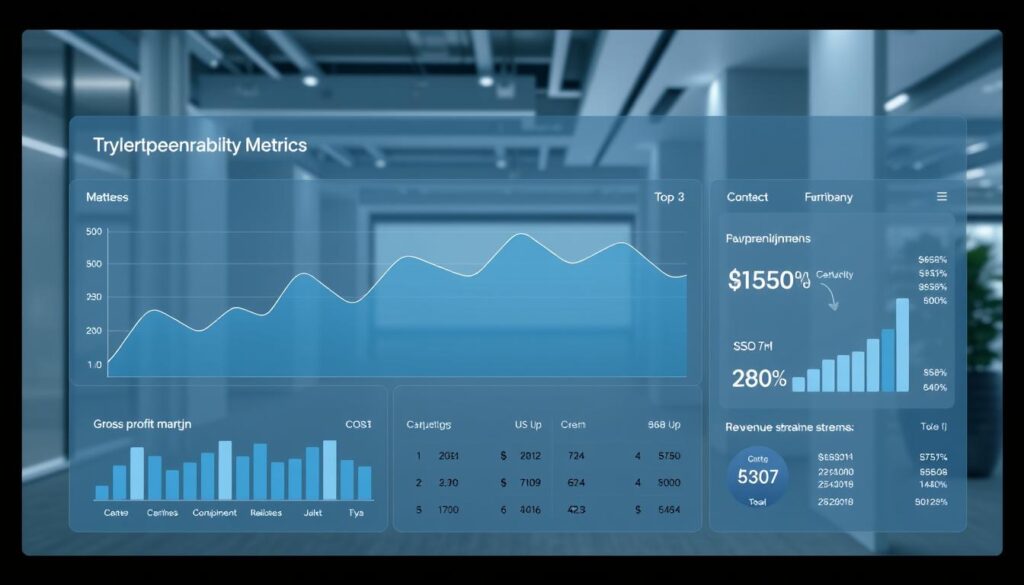
Gross Profit Margin is a key indicator of a business’s profitability. It shows how well a company manages its production costs. This metric is important for checking your pricing strategy and how well your business operates.
Understanding Gross Profit Margin
The Gross Profit Margin shows what percentage of revenue is left after deducting the cost of goods sold. This percentage tells you about your business’s financial health. A higher Gross Profit Margin means your business could be more profitable if other costs are controlled.
Knowing this metric is key for making smart decisions about pricing and managing costs. These are important parts of financial analysis for UK entrepreneurs.
Calculating and Interpreting the Metric
To find the Gross Profit Margin, use this formula:
| Calculation | Formula | Example |
|---|---|---|
| Gross Profit Margin | ((Revenue – Cost of Goods Sold) / Revenue) x 100 | ((£200,000 – £120,000) / £200,000) x 100 = 40% |
A Gross Profit Margin of 40% means you keep £0.40 for every pound sold. This shows good cost management. By watching this KPI, you can spot areas to improve and plan strategies that meet your business goals. For more on financial ratios, check here.
Net Profit Margin: Importance and Impact
For any entrepreneur aiming for growth in the UK, understanding net profit margin is key. It shows the percentage of revenue left after all costs are deducted. For UK businesses, knowing how to calculate this is vital for better operations and profits.
Defining Net Profit Margin
Net profit margin is found by dividing net profit by total revenue and then multiplying by 100. This KPI shows how well a company controls its costs. It helps you check your business’s health and make smart choices about pricing and investments. A high margin means you’re making good money, while a low one might mean you need to improve.
Using Net Profit Margin in Strategic Planning
Using net profit margin in your plans can give you an edge. By regularly checking this, you spot trends that could impact your finances. This lets you tweak your strategies, like cutting costs or changing prices. Plus, a strong net profit margin can draw in investors, boosting confidence in your business.

Current Ratio: Assessing Liquidity
The Current Ratio is key to knowing if your company can pay short-term debts. It shows if you have enough assets to cover your liabilities. To keep your finances healthy, it’s important to understand this ratio.
This ratio is found by dividing your current assets by your current liabilities. If it’s over one, it means you have more assets than liabilities. This is a good sign for your liquidity.
How to Calculate Current Ratio
To find your Current Ratio, just use this formula:
| Current Assets | Current Liabilities | Current Ratio |
|---|---|---|
| £80,000 | £50,000 | 1.6 |
| £50,000 | £50,000 | 1.0 |
| £30,000 | £40,000 | 0.75 |
This formula helps you keep an eye on your business’s health. It lets you make changes to your financial plan if needed.
Best Practices for Maintaining an Acceptable Ratio
To keep a good Current Ratio, follow these steps:
- Check your finances often to make sure everything is right.
- Try to keep your ratio between 1.2 and 2.0. This balance is good for both liquidity and using your assets well.
- Improve your cash flow by handling accounts receivable and inventory better.
- Use forecasts to predict future debts and adjust your assets as needed.
By doing these things, your business can stay liquid and financially strong.

Quick Ratio: A Key Liquidity Metric
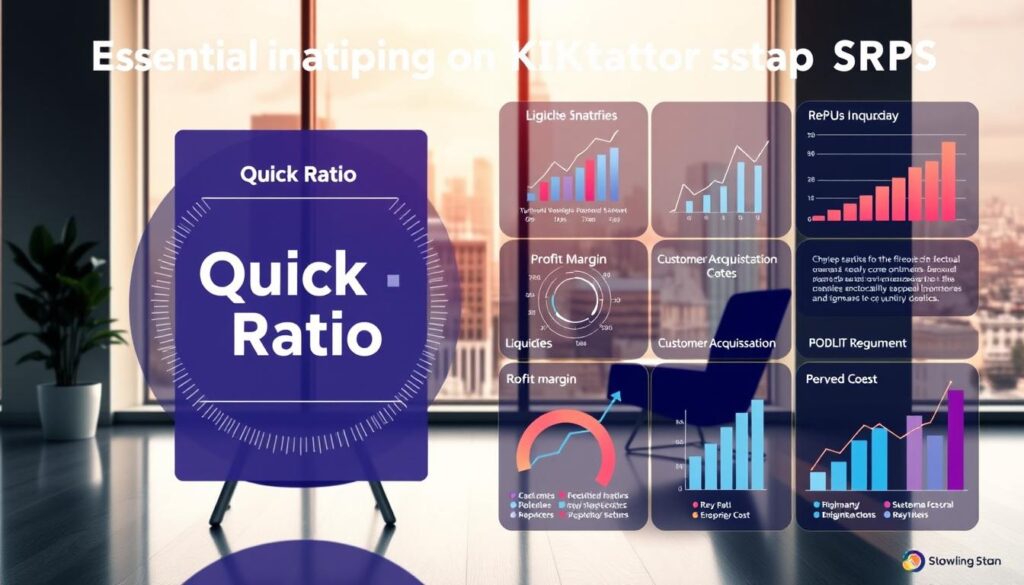
The Quick Ratio, also known as the Acid Test Ratio, is key for checking liquidity in any business. It shows if you can pay short-term debts without selling inventory. For UK startups, knowing this ratio is vital in the UK business sector.
The Significance of Quick Ratio
A Quick Ratio over one means you have enough liquid assets to meet current debts. This is very important for UK startups. It helps avoid cash flow problems and shows the need for good financial planning. Keeping an eye on this ratio helps improve management and strategies.
Implications of Quick Ratio on Business Operations
A strong Quick Ratio affects many parts of your business. It shapes your financial plans and how you deal with suppliers and creditors. A higher ratio can give you better deals. But a lower ratio might mean changing how you run your business to keep it liquid.
Return on Equity: Measuring Profitability
Understanding Return on Equity (ROE) is key to checking your company’s health. This metric shows how well your business uses shareholders’ money to make profit. A high ROE means your business is using equity well, showing it’s strong and efficient.
How ROE Reflects Business Efficiency
ROE is found by dividing net profit by shareholders’ equity. It shows how well a company turns equity into profit. Tracking ROE regularly helps see how your business is doing over time. You can also compare it with others in your industry to see how you stack up.
Strategies to Improve ROE
To boost ROE, try these:
- Boosting profitability by increasing sales or improving product margins.
- Effectively managing costs to maintain operational efficiency.
- Optimising your capital structure to leverage additional equity without excessive risk.
These steps not only raise ROE but also help your business grow and stay stable.

Financial Leverage: Understanding Risks and Benefits
Financial leverage means using borrowed money to buy assets. It can greatly affect a business’s profits. For UK entrepreneurs, knowing the risks and benefits is key to good financial planning. They need to understand financial analysis to make smart choices that help their business grow while keeping risks low.
Calculating Leverage Ratios
To check financial leverage, you need to calculate the leverage ratio. It’s Total Debt divided by Shareholders’ Equity. This shows how much debt a company uses compared to its equity. A high ratio means more debt, which can increase profits when things are good. But, it also ups the risk, mainly if sales drop.
Evaluating the Impact on Profitability
Keeping an eye on leverage ratios is important for your company’s health. UK entrepreneurs use financial analysis to find the right mix of debt and equity. This balance is key for steady growth and managing risks. Using leverage wisely can boost profits, but too much debt can cause problems, like during tough economic times.
Operating Cash Flow: A Vital Indicator
Operating Cash Flow (OCF) is key to seeing how much cash your business makes from its main activities. It shows if you can grow without needing too much outside help. Knowing OCF helps you keep an eye on your business’s health and cash flow.
Importance of OCF in Business Management
Having a positive OCF is vital for any business. It shows how good you are at turning sales into cash. This cash is needed to keep your business running and growing.
A strong OCF lets you invest in your business, pay off debts, or share profits with shareholders. Checking OCF regularly is important for making smart business choices.
Strategies to Improve Operating Cash Flow
To boost your OCF, you need to focus on a few key areas. Here are some ways to do it:
- Make sure you get paid on time by your customers.
- Manage your stock well to avoid too much waste and save on costs.
- Work out better deals with your suppliers to save on what you pay them.
- Look at your costs regularly and cut any unnecessary spending.
By working on these areas, you can keep your business financially strong. Focus on these steps to improve your Operating Cash Flow and ensure your business’s long-term success.
Conclusion
For UK startups, keeping an eye on key KPIs is vital. It helps you understand your financial health and make smart decisions. By tracking important financial metrics, you can grow your business.
Consistency is important when tracking financial metrics. Regular checks help you adjust to market changes. This focus on financial indicators boosts your business’s performance.
Staying committed to financial health through KPIs is key for success. Learn more about the 10 financial metrics and KPIs every leader should know. This knowledge will help you succeed in the UK market.
FAQ
What are financial KPIs?
Financial KPIs, or Key Performance Indicators, are measurable signs. They help you check if your business is doing well based on key financial data.
Why are financial KPIs important for UK entrepreneurs?
They give you insights into your business’s financial health. This lets you make smart decisions, spot trends, and compare with competitors. It helps align your strategy with your growth goals.
What types of financial KPIs should I monitor?
Focus on profitability, liquidity, efficiency, and solvency KPIs. This gives you a full view of your business’s performance and health.
How can I calculate Gross Profit Margin?
To find Gross Profit Margin, use this formula: (Revenue – Cost of Goods Sold) / Revenue * 100. It shows how much profit you keep after covering production costs.
What does the Net Profit Margin indicate?
The Net Profit Margin shows how much profit you make after all expenses. It’s Net Profit / Total Revenue * 100. It shows your overall profit and how well you run your business.
How do I assess my company’s liquidity using the Current Ratio?
The Current Ratio is Current Assets / Current Liabilities. A ratio over one means you have more assets than liabilities. This shows good liquidity.
What is the significance of the Quick Ratio?
The Quick Ratio, or Acid Test Ratio, shows if you can meet short-term debts without selling inventory. It’s (Current Assets – Inventory) / Current Liabilities.
How does Return on Equity (ROE) affect my business strategy?
ROE shows how well you use shareholders’ money to make profits. It’s Net Profit / Shareholders’ Equity. A high ROE means you’re using money well, which attracts investors.
What are the implications of financial leverage in my business?
Financial leverage is using debt to finance assets. It’s Total Debt / Shareholders’ Equity. It can boost returns but also increases risk, so it must be managed well.
Why is Operating Cash Flow (OCF) important?
OCF shows cash from main business activities. It shows if you can grow without needing outside money. This is key for keeping your business healthy and liquid.