

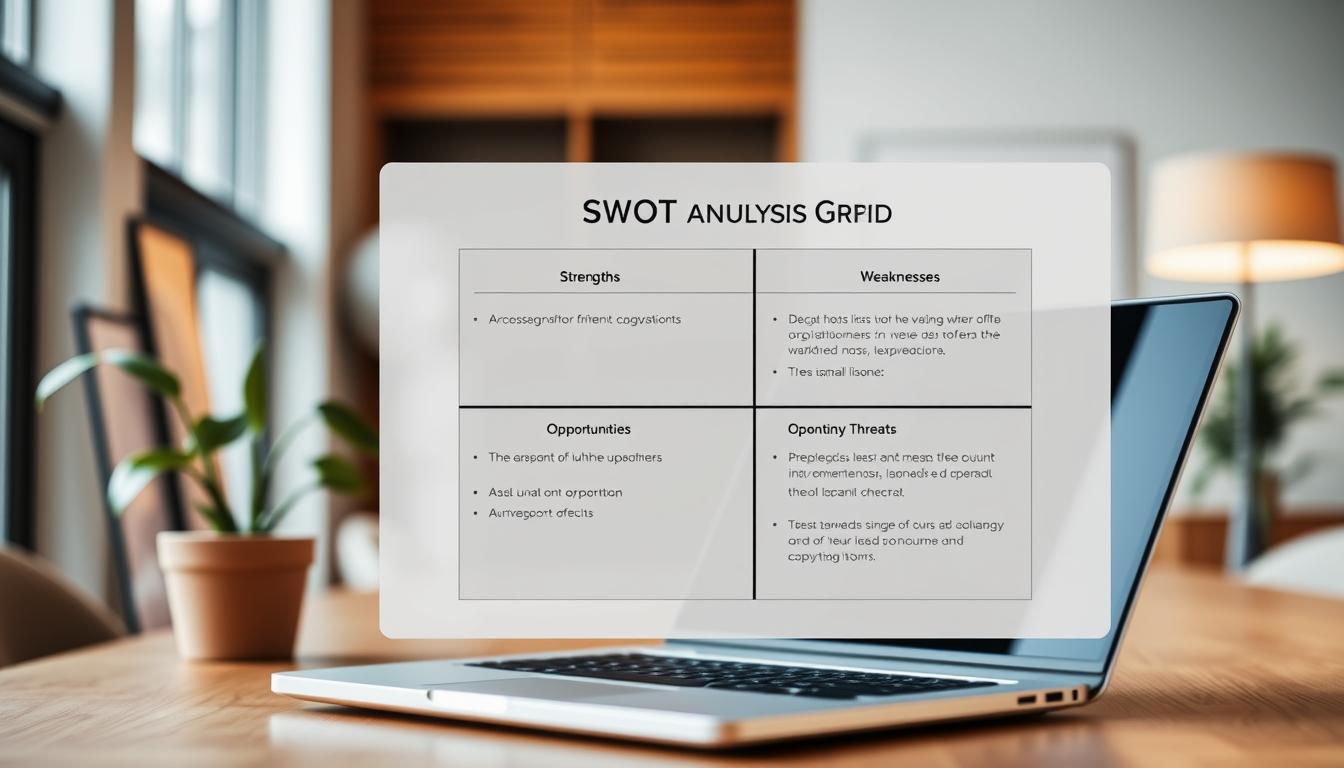
A SWOT analysis is key for UK small businesses. It helps them spot their Strengths, Weaknesses, Opportunities, and Threats. By using a SWOT analysis template, business owners can understand what’s going on inside and outside their company.
This method started in the 1960s and is as important today as it was back then. Looking at a UK small business SWOT analysis sample shows how it helps businesses make better decisions. It also helps them stay competitive in the market.
Table of Contents
Key Takeaways
- SWOT analysis assists in recognising internal strengths and weaknesses.
- The tool helps in identifying external opportunities and threats.
- Applying a SWOT analysis template enhances strategic decision-making.
- Understanding each element of SWOT is vital for business growth.
- Collaboration in SWOT analysis leads to more complete insights.
Introduction to SWOT Analysis
Knowing what SWOT analysis is key for business owners. It helps you understand your company’s strengths and weaknesses. It also looks at external opportunities and threats. This way, you can make better strategic decisions and stay ahead of the competition.
What is SWOT Analysis?
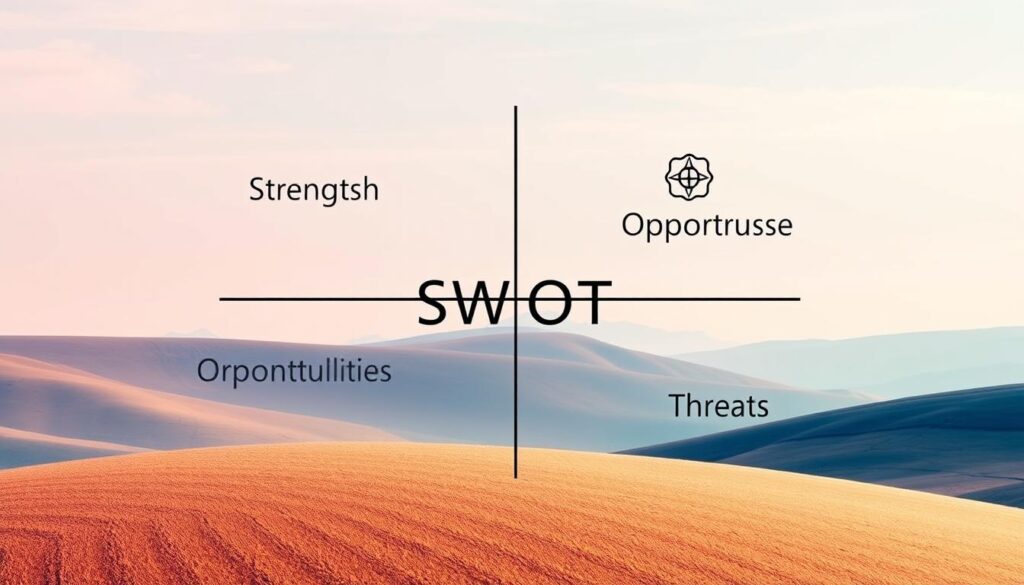
SWOT stands for Strengths, Weaknesses, Opportunities, and Threats. It’s a tool to understand your business world. It helps you see what you’re good at, what needs work, and what chances you have. It also shows you what challenges you face.
Importance of SWOT in Business Strategy
SWOT analysis is very important for business strategy. It helps you match your skills with market needs. This makes planning easier and more effective. Using SWOT analysis helps your business grow and stay strong.
For a detailed guide on SWOT analysis for UK small businesses, check out this resource. It provides templates and guides to help you.
Understanding Each Element of SWOT
Each part of the SWOT framework gives us key insights. It helps us see where we stand in the market. Knowing these parts helps us make better decisions and grow.
Strengths: Internal Advantages
Strengths are what make your business better than others. This could be a strong brand, special tech, or loyal customers. Using these strengths can help you get more market share and keep customers.
Weaknesses: Internal Limitations
Weaknesses are things your business needs to work on. This might be slow operations, not enough resources, or losing employees. Spotting weaknesses early lets you fix them, keeping your business strong.
Opportunities: External Potentials
Opportunities come from outside your business. They could be new trends, cool tech, or different customer wants. Finding these chances lets you grow and make more money.
Threats: External Challenges
Threats are outside issues that could harm your business. This could be more competition, bad economy, or new rules. Knowing about threats helps you plan ahead and stay strong.

Using the SWOT framework in planning helps you understand your business and market better. It’s a key part of making smart decisions and growing.
Conducting SWOT Analysis for UK Small Businesses
Starting a SWOT analysis for a UK small business needs careful steps. First, gather a team with different roles in your company. This team brings in fresh views, thanks to frontline staff who see things up close. Make sure you have clear goals for this analysis to get useful results.
To do a SWOT analysis for a small UK business, fill out each part of the SWOT matrix. This will help you see your company’s strengths and weaknesses, and the chances and risks outside. For example, the food industry is changing fast, with new tastes to tap into. The personal services sector is also growing, opening up big chances.

By following these steps, you’ll improve your SWOT analysis and planning. Look into areas like the pet care industry or online shopping. These trends can spark new ideas, as shown in this resource on small business opportunities.
SWOT Analysis Example UK Small Business
Looking at a real example of a SWOT analysis for a UK small business can help with planning. A small video production company that works with SMEs is a great example. It shows how to spot strengths, weaknesses, opportunities, and threats for a small business in the UK.
Case Study: A Small Video Production Company
This company has a talented and quick team. They have a portfolio that meets the needs of SMEs. Their skill in writing engaging scripts makes them stand out in a crowded market.
But, they face challenges. A small marketing budget limits how far they can reach out. Relying too much on a few big clients can also be risky, as it can affect their income.
Despite these challenges, there are big opportunities. More businesses want video content, and they want it on different platforms. Working with marketing agencies and expanding to new areas could bring in more clients.
But, there are also threats. More freelancers and big agencies are competing. Switching to in-house production for big clients is hard. And, some small clients might choose to make their own videos.
Matrix Representation of the SWOT Analysis
| Strengths | Weaknesses |
|---|---|
| Agile team | Limited marketing budget |
| Strong portfolio in SME niche | Reliance on few key clients |
| Creative scriptwriting capabilities | Challenges in high-volume content production |
| Opportunities | Threats |
| Growing demand for video content | Increasing competition |
| Potential partnerships with marketing agencies | In-house production by larger clients |
| Expansion into new geographic markets | Confidence of smaller clients in self-shooting |
This summary shows the strengths, weaknesses, opportunities, and threats of the video production business. It’s a key example of how to do a SWOT analysis for a small business in the UK. For more information, check out a detailed guide on SWOT analysis examples.
The Role of Strategic Planning in SWOT Analysis
Strategic planning is key in SWOT analysis for making smart decisions. It helps businesses set goals that match their SWOT findings. This way, they can use their strengths and find new growth chances.
Doing a SWOT analysis helps a company see its inner and outer worlds clearly. Strategic planning then comes in to make plans that use strengths for new chances. For example, a strong brand can lead to entering new markets.
Strategic planning also helps tackle weaknesses and threats found in SWOT analysis. Companies can make plans to reduce risks and stay strong in changing markets.
Using SWOT insights in strategic planning makes a company think ahead. It makes it easier to keep up with market changes and stay competitive. This way, strategic planning helps in growing and innovating for the long term.

Tips for Effective SWOT Analysis
To do a good SWOT analysis, you need to pay close attention and work together. These tips help you look at your business’s inside and outside world well. Here are some important ways to make your analysis better.
Involve Multiple Stakeholders
Getting different team members involved is key. It brings many views to the table. This way, you get a full picture of your business’s good points and weak spots.
This approach also helps find opportunities and dangers you might miss.
Be Specific and Realistic
Being clear is very important in a SWOT analysis. Don’t use vague words. Stick to real, specific points that help you make plans.
Being specific makes your findings more useful. It helps you set clear goals and plans that match your aims.
Utilise Data and Customer Insights
Using data and what customers say makes your SWOT analysis stronger. Adding market research and performance data makes your insights real. This makes your plans more solid and follows the best SWOT analysis practices.
By using facts, you build a solid base for smart business choices. Studies show small businesses can grow a lot with just a few changes to their plans. Using these methods can greatly lower the chance of failure.
Common Mistakes to Avoid in SWOT Analysis
Doing a SWOT analysis is great for planning, but there are traps to watch out for. To make a good analysis, it’s key to know and dodge these traps.
Overlooking External Factors
One big mistake is ignoring outside factors. Not looking at trends, market changes, and what competitors do can mess up your view of the business world. These things can really change what opportunities and dangers there are, affecting your plans.
Failing to Prioritise Findings
Another mistake is not picking the most important points. Listing lots of strengths, weaknesses, opportunities, and threats without sorting them can confuse things. By focusing on the most critical points, your planning stays sharp and on track.
Ignoring Team Input
Not getting input from the team weakens your analysis. Getting views from different levels of the team adds depth and makes everyone feel part of the outcome. This teamwork leads to better decisions and helps avoid missing important details.
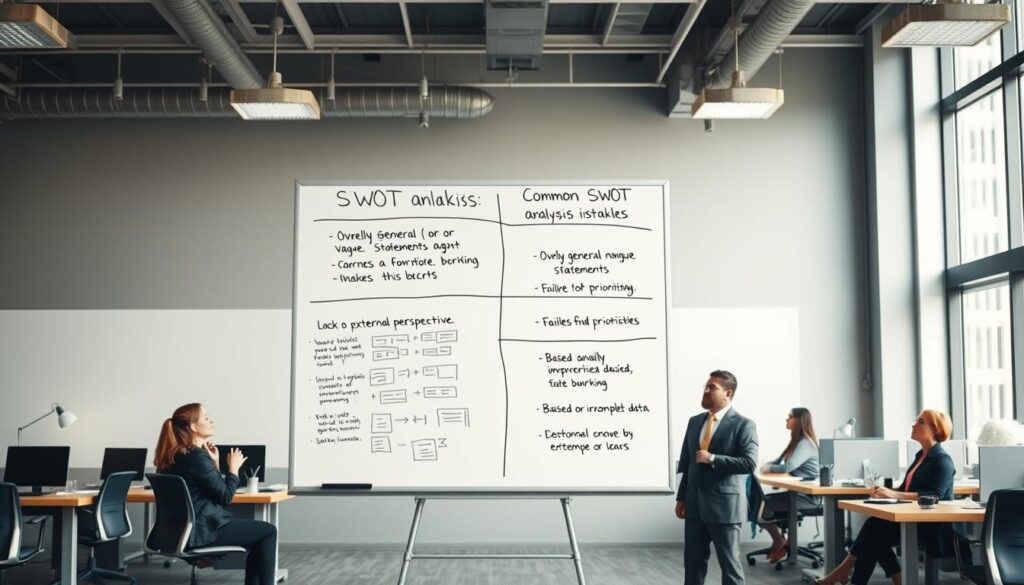
| Mistake | Description | Impact |
|---|---|---|
| Overlooking External Factors | Failing to consider market trends and competitor actions | Leads to an incomplete analysis and misguided strategies |
| Failing to Prioritise Findings | Not assessing the importance of identified strengths, weaknesses, opportunities, and threats | Results in diluted focus and ineffective planning |
| Ignoring Team Input | Excluding diverse perspectives in the process | Limits the analysis and decision-making quality |
Leveraging SWOT Analysis for Business Growth
Using SWOT analysis for small business growth is a smart strategy. It helps you use your company’s strengths and find areas to get better. This way, you can spot what makes you special and use it to grow.
It’s also important to watch out for weaknesses. Fixing these can make your business stronger and more reliable. Keeping your SWOT analysis up to date helps your plans stay on track.

Listening to what others think and checking your SWOT analysis regularly helps make better choices. This leads to growth and keeps your business strong. Being open to change helps your business succeed in today’s world.
Conclusion
A SWOT analysis is key for any UK small business. It helps you understand your strengths and weaknesses, and the opportunities and threats around you. This is why knowing the importance of SWOT analysis for small is so important.
Regular SWOT analyses help you tackle challenges and grab opportunities for growth. This boosts your competitive edge and makes your business agile. It lets you quickly adapt to changes in the market.
Today’s fast-changing market makes your SWOT analysis even more critical. It guides your strategies, helping you reach your goals while overcoming obstacles. Keeping your SWOT analysis current ensures your business stays strong and competitive.
FAQ
What is a SWOT analysis?
A SWOT analysis is a tool for strategic planning. It helps businesses find their Strengths, Weaknesses, Opportunities, and Threats. This way, they can make better decisions and plan their strategies.
How do I conduct a SWOT analysis for my small business in the UK?
To do a SWOT analysis, start by gathering a team with different views. Define what you want to cover. Then, fill out the SWOT matrix carefully. Make sure you hear from everyone in your organisation.
Can you provide a small business SWOT analysis example in the UK?
Let’s say you run a video production company. Your strengths might be a skilled team. Weaknesses could be a small marketing budget. Opportunities might be the growing need for videos. Threats could be more competition.
What are the common mistakes to avoid when performing a SWOT analysis?
Don’t miss out on important external factors. Don’t ignore the findings. And make sure everyone in your organisation is heard.
How can I ensure my SWOT analysis is effective?
To make it effective, get input from many people. Focus on real and specific points. Use data like customer feedback and market research.
Why is SWOT analysis important for small businesses in the UK?
It’s key because it helps you understand your business and the outside world. It guides your decisions and planning.
How often should I update my SWOT analysis?
Update it often to keep up with market changes. This way, you can quickly respond to new opportunities and threats.
What resources can aid in conducting a SWOT analysis for my small business?
Use market research, customer feedback, industry tools, and performance data. These can help you do a thorough SWOT analysis.