

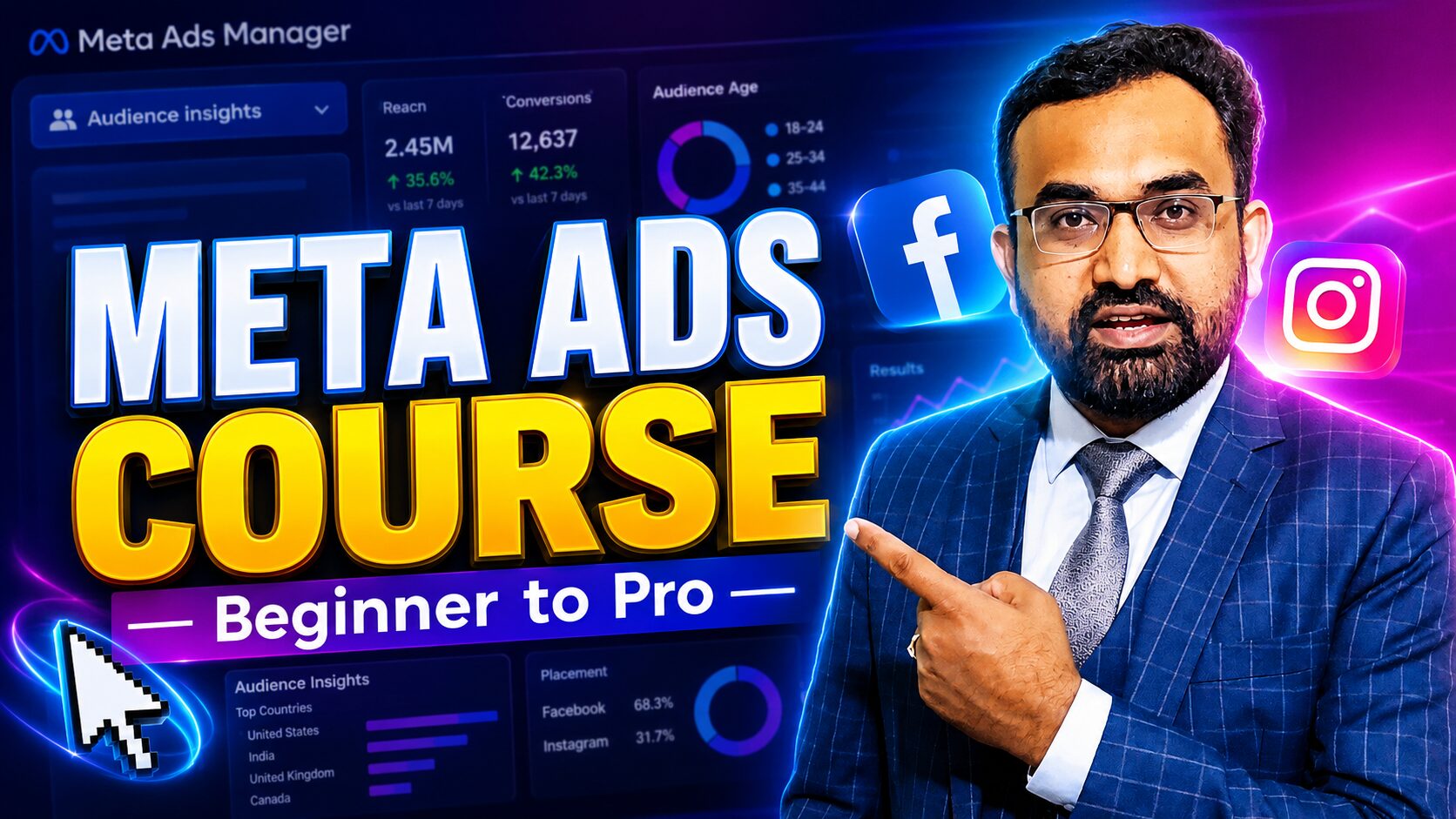
Many entrepreneurs and digital marketers face the same frustrating reality: they pour significant capital into Facebook and Instagram ads only to see their budget burn with zero results. This failure usually stems from a fundamental misunderstanding of the platform’s logic. Simply clicking a button and hoping for a miracle is not a strategy—it is a gamble that the house always wins.
To move from beginner-level frustration to professional-grade growth, you must stop “boosting posts” and start managing a sophisticated advertising machine. This Meta Ads roadmap provides the strategic sequence required to scale an online business effectively. Whether you are a Shopify store owner, a service provider, or a freelancer, this path moves you beyond guesswork and into the realm of data-driven precision.
By following this structured approach, you will master everything from technical foundations like the Conversion API to the psychological triggers of high-converting creative. The goal is to build a sustainable, scalable system that treats advertising as an investment rather than an expense.
Table of Contents
Key Takeaways
- Data Beats Guesswork: Professional success is reserved for those who interpret metrics to drive decision-making.
- The Blindfold Effect: Running ads without a Meta Pixel and Conversion API (CAPI) prevents the AI from finding your customers.
- The 3-Second Hook: Your ad’s first three seconds determine your entire campaign’s ROI; fail the hook, and you lose the budget.
- Psychology Over Product: Customers do not buy products; they buy results, emotions, and trust.
- Stability Matters: Never judge a campaign on day one. Analyze initial data at 72 hours, but look for true stability between days 16 and 19.
——————————————————————————–
Phase 1: Understanding the Meta Ads Ecosystem
The Meta Ads ecosystem is a powerful engine designed to find targeted customers for e-commerce, real estate, and service-based businesses. However, the greatest barrier to entry is the “Boost Post” button. While tempting, it lacks the professional optimization, tracking, and deep targeting tools found only in the Meta Ads Manager.
Expert advertisers win by understanding the story the data tells. You cannot optimize what you do not measure. Use the following metrics as your North Star:
|
Metric
|
Full Name
|
Definition
|
|---|---|---|
|
CTR
|
Click-Through Rate
|
The percentage of people who clicked your ad after seeing it.
|
|
CPA
|
Cost Per Acquisition
|
The average cost to acquire one customer or lead.
|
|
CTC
|
Click-Through-Conversion
|
The rate at which clicks turn into actual sales or actions.
|
|
ROAS
|
Return On Ad Spend
|
Revenue generated for every dollar spent on advertising.
|
|
CVR
|
Conversion Rate
|
The percentage of users who took the desired action on your site.
|
——————————————————————————–
Phase 2: Technical Foundations (Pixel & Conversion API)
Before you launch your first campaign, you must remove the “blindfold” from Meta’s AI. The Meta Pixel is a traffic code that tracks user actions, but due to modern privacy updates and browser restrictions, the Pixel alone is no longer sufficient.
Setting up the Conversion API (CAPI) is now a mandatory prerequisite for any professional Shopify store setup or e-commerce venture. CAPI creates a server-side connection that ensures your data is accurate even when browser cookies fail. Without this technical foundation, the system cannot see who is buying, which means it cannot optimize its search for your next customer.
——————————————————————————–
Phase 3: Mastering Campaign Objectives & Lead Quality
A common “Pro” mistake is choosing the wrong objective for your business goal. Meta’s algorithm is literal: if you ask for “Traffic,” it will find people who click links but never buy.
- Sales: Mandatory for e-commerce and direct revenue.
- Leads: Critical for service businesses like real estate or clinics.
- Engagement: Best for social proof, followers, and brand building.
High-Ticket vs. Low-Ticket Leads
For service providers, lead quality is more important than quantity. You must choose between Instant Forms (higher volume, lower friction) and Website Forms (lower volume, higher intent). If your sales team is struggling with “junk” leads, move your forms to your website to increase the commitment required from the prospect.
——————————————————————————–
Phase 4: Advanced Audience Targeting
Targeting has evolved from broad interest-based guesswork to AI-driven segments:
- Cold Audience: Reaching prospects who have zero prior awareness of your brand.
- Custom Audience: Targeting “warm” users who have already interacted with your site, watched a video, or added an item to a cart.
- Lookalike Audience (LAL): Asking Meta to find the “best customer” clones by analyzing the data of your existing buyers.
——————————————————————————–
Phase 5: The “Heart” of Meta Ads—Creative Philosophy
In the current landscape, Powerful Creative > Complex Targeting. As Meta’s AI becomes more autonomous, the creative itself does the targeting.
To succeed, you must adopt this philosophy: “A customer never buys a product; they buy results, emotions, and trust.” Your creative must reflect this through various formats like User-Generated Content (UGC), Carousels, and Testimonials.
The High-Converting Copy Formula
- The Hook: A visual or textual “stop” that captures attention in under 3 seconds.
- Benefits: Clearly state the transformation or result the customer will achieve.
- Offer: A compelling reason to buy now.
- Credibility: Testimonials and social proof to bridge the trust gap.
- CTA: A clear, singular instruction (e.g., “Get the Offer”).
——————————————————————————–
Phase 6: E-Commerce Scaling & Retargeting Strategies
E-commerce success is a two-step dance: Creative Testing and Budget Scaling.
The Testing Workflow
Start with a Creative Testing Campaign to identify which visuals and products resonate. Do not touch the budget for the first 3 days (initial data). The “Pro” secret is waiting until Day 16 to Day 19 to analyze for long-term stability before making major scaling decisions.
Retargeting: The 7 Best Strategies
Most customers do not buy on the first visit. Retargeting is where you win back “warm” audiences who abandoned their carts. Focus on:
- Trust Building: Showing video testimonials of happy customers.
- Social Proof: Highlighting reviews and ratings.
- Specific Offers: Providing a unique discount or bonus for returners.
- Educational Content: Solving the customer’s last remaining objection.
——————————————————————————–
Phase 7: The Marketing Funnel & AI Updates (Andromeda)
- TOFU (Top of Funnel): Broad awareness for cold prospects.
- MOFU (Middle of Funnel): Consideration and education for those who engaged.
- BOFU (Bottom of Funnel): High-intent conversion for those ready to buy.
The Shift to Meta Andromeda and AI
We are entering the era of Meta Andromeda and AI-driven automation. Tools like Advantage+ Shopping Campaigns and automated placements allow Meta’s AI to do the heavy lifting of optimization. While manual controls are still vital for testing, the “Pro” roadmap involves gradually shifting winning campaigns toward Advantage+ settings to leverage Meta’s machine learning.
——————————————————————————–
Conclusion
Mastering Meta Ads is not about having the largest budget; it is about building a system of technical accuracy and psychological resonance. By moving from the “Boost” button to a structured small business finance approach to ad spend, you transform your marketing into a predictable revenue engine.
Knowledge without application is overhead. Audit your current account today: ensure your CAPI is active, your hooks are under three seconds, and you are allowing your campaigns the full 16–19 day window to prove their worth.
——————————————————————————–
Frequently Asked Questions
1. Why am I spending money but getting zero sales?
Usually, this is a result of the “Wrong Objective” (Traffic instead of Sales) or a “Hook” that fails to capture attention in the first three seconds, leading to wasted impressions.
2. Is the Pixel enough for tracking in 2025/2026?
No. Due to privacy updates, the Conversion API (CAPI) is now mandatory. Without it, you are effectively putting a “blindfold” on Meta’s ability to find buyers.
3. How long should I wait before scaling a campaign?
Check initial metrics after 72 hours, but do not scale significantly until the Day 16 to Day 19 window. This allows the algorithm to move past the “learning phase” and stabilize.
4. What is the difference between Instant Forms and Website Forms for leads?
Instant Forms stay within Facebook/Instagram and provide more leads at a lower cost. Website Forms require the user to leave the app, resulting in fewer leads but significantly higher quality and intent.
5. How much should I increase my budget when scaling?
Never double a budget instantly. Identify “winning” creatives first, then increase the budget by 20% every 48-72 hours to avoid resetting the algorithm’s learning phase.